
Camera Traps vs Live Surveillance: Choosing the Right Wildlife Monitoring Tool
Camera traps and live PTZ surveillance solve different conservation problems. A practical guide to which technology fits which forest monitoring objective.
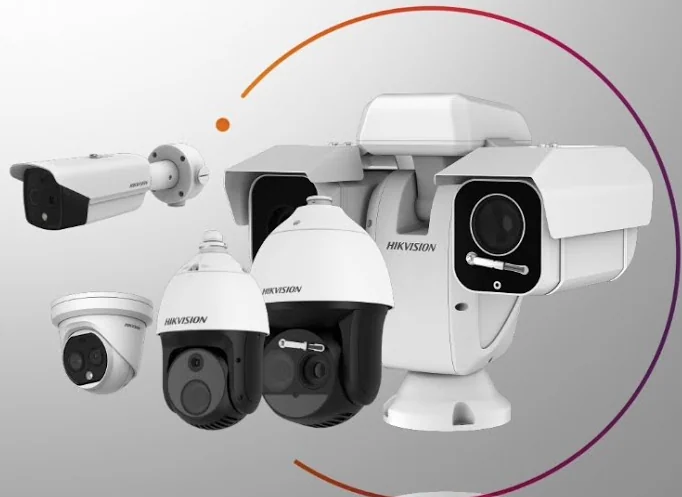
Almost every forest division we work with asks a version of the same question: should we invest in more camera traps, or in a live surveillance system? The honest answer is that they are not competing products. They answer different questions, and buying the wrong one is an expensive way to learn that.
What camera traps are actually good at
A camera trap is a passive research instrument. It sits on a tree, waits for a passive infrared trigger, records, and stores locally. Nobody is watching. Its value is statistical: over weeks and months it builds a dataset dense enough to estimate occupancy, individual identification and population trends.
- Population estimation and individual ID — the striped or spotted flank patterns that make tiger and leopard census work possible
- Occupancy studies across a large grid, where you need many cheap units rather than a few expensive ones
- Documenting species presence in areas nobody can visit regularly
- Long deployments where battery life matters more than latency
What a camera trap cannot do is help you in the moment. If it photographs a person carrying a snare at 2 a.m., you will find out when somebody walks to that tree and pulls the SD card — often two or three weeks later. By then the evidence is historical.
What live surveillance changes
A live PTZ system inverts the trade-off. Instead of many passive units, you place a few high-capability nodes on towers, connect them over wireless backhaul, and put the footage in front of somebody in a control room right now. The value is no longer statistical — it is operational.
- Intrusion detection at boundaries, waterbodies and known pressure points
- Monitoring animals in enclosures, bomas and rehabilitation centres where welfare decisions are time-sensitive
- Giving a patrol team a reason to move tonight rather than a report next month
- Deterrence — a visible, known-monitored perimeter changes behaviour on its own
“The question is not which technology is better. It is whether you need to know what happened, or need to act while it is happening.”
The constraints nobody mentions in the brochure
Power
A camera trap runs for months on AA cells. A PTZ camera with IR illuminators, a wireless radio and an edge AI device needs continuous power measured in tens of watts. In a forest with no grid, that means solar capacity, a LiFePO4 battery bank sized for monsoon weeks with little sun, and an MPPT controller. Our standard off-grid node runs 1.2 kW of panels against a 2.56 kWh battery for roughly 20+ hours of autonomy — and that sizing exists because the first thing that kills a remote deployment is a flat battery in the second week of July.
Connectivity
Live means live. If there is no cellular coverage — and in the core of most protected areas there is not — you need point-to-point or point-to-multipoint wireless backhaul with clear line of sight. At Pench, the camera sits nine kilometres from the monitoring room over a wireless link. Planning that link is as much a part of the deployment as choosing the camera.
Somebody has to watch
This is the failure mode we see most often. A live system with no staffed control room and no alerting is just an expensive camera trap with a worse battery. This is where AI detection earns its place: line-crossing and human or vehicle detection convert a continuous video stream into a small number of events worth a human's attention.
A simple way to decide
- If your objective is a number in a report — population, occupancy, species list — start with camera traps.
- If your objective is a decision someone makes tonight — intrusion, animal welfare, fire — you need live surveillance.
- If you have a defined high-value perimeter, an enclosure, or a known pressure point, live surveillance pays for itself fastest.
- If your area is large, undifferentiated and you cannot say where the risk concentrates, spend on coverage first and surveillance later.
Most mature deployments end up running both. Camera traps tell you where the pressure is. Live surveillance is what you install once you know.